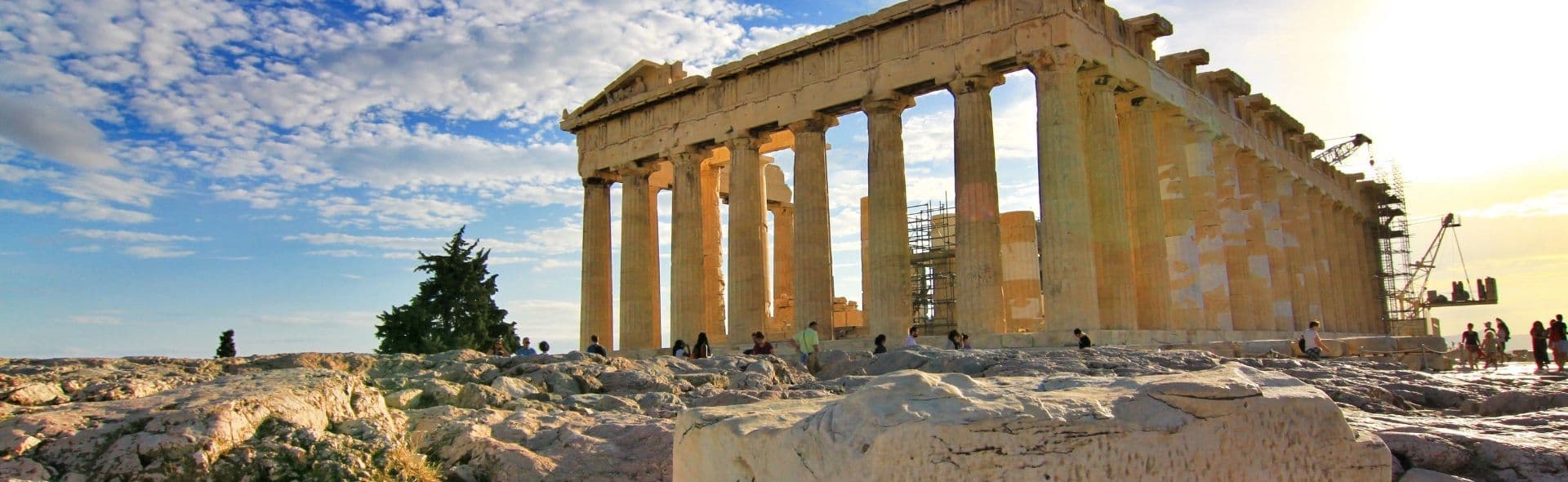



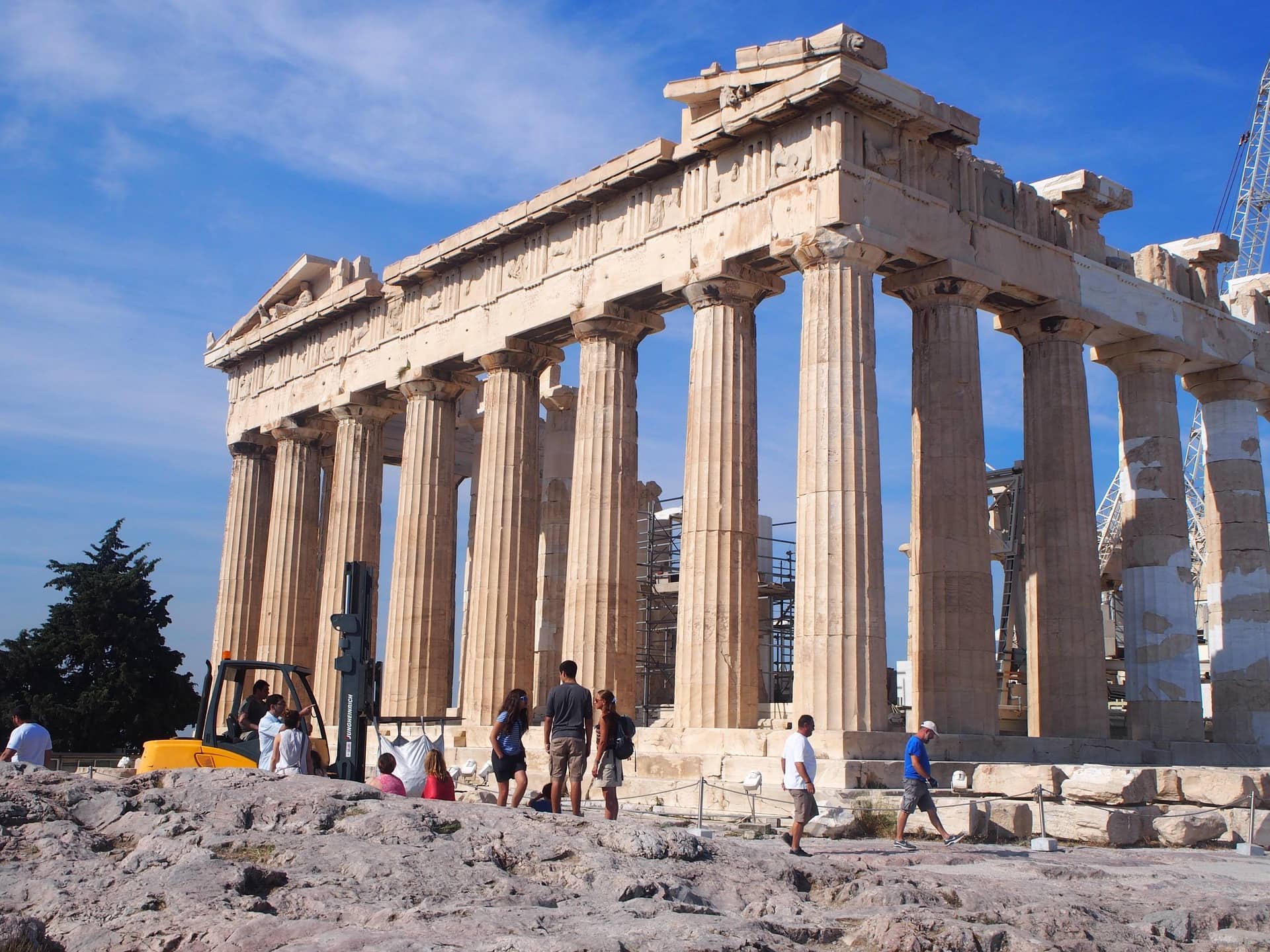
Greece offers school groups the rare chance to study the origins of democracy, drama and Western historiography in the places where they happened. A well-planned itinerary can take students from the Acropolis to Delphi and Olympia in a single week, with every site reinforcing classroom study.
Students can stand in the Pnyx, where the Athenian assembly voted, then walk to the Ancient Agora and the reconstructed Stoa of Attalos to see where Socrates taught and traded. The Acropolis Museum displays the surviving Parthenon sculptures in sight of the temple itself, prompting genuine debate about the Parthenon Marbles held in London. Beyond Athens, the stadium at Olympia, the theatre at Epidaurus with its celebrated acoustics, and the Lion Gate at Mycenae give a physical scale to periods students usually meet only in textbooks.
Curriculum links
History
Athens provides the Acropolis, the Ancient Agora and the National Archaeological Museum, while day trips reach Delphi, Marathon, Mycenae and the Sanctuary of Olympia for direct study of Classical and Bronze Age Greece.
When to travel
Athens has a Mediterranean climate with hot, dry summers and mild, wet winters, averaging around 18.9°C across the year. Group visits are shaped mainly by heat and shade, as archaeological sites such as the Acropolis offer very little cover.
Spring
March to MayWarm, green and comfortable for site walking; the strongest window for school groups.
Summer
June to AugustHot and dry, often above 33°C; early starts and frequent water breaks essential.
Autumn
September to NovemberCooling steadily with clear skies; excellent for touring, with rain later on.
Winter
December to FebruaryMild but wet, around 10-14°C; quiet sites, though some hours are shortened.