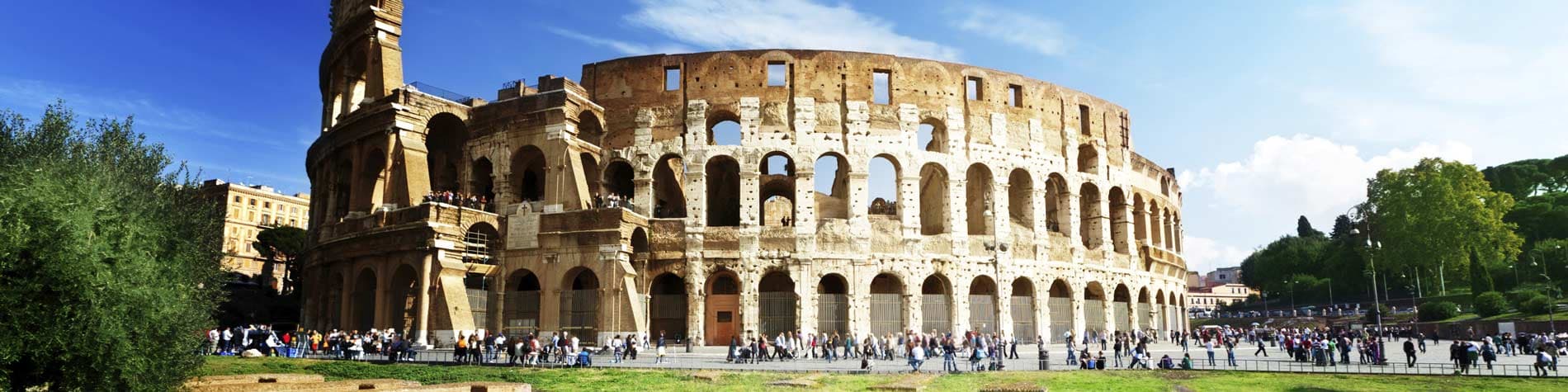



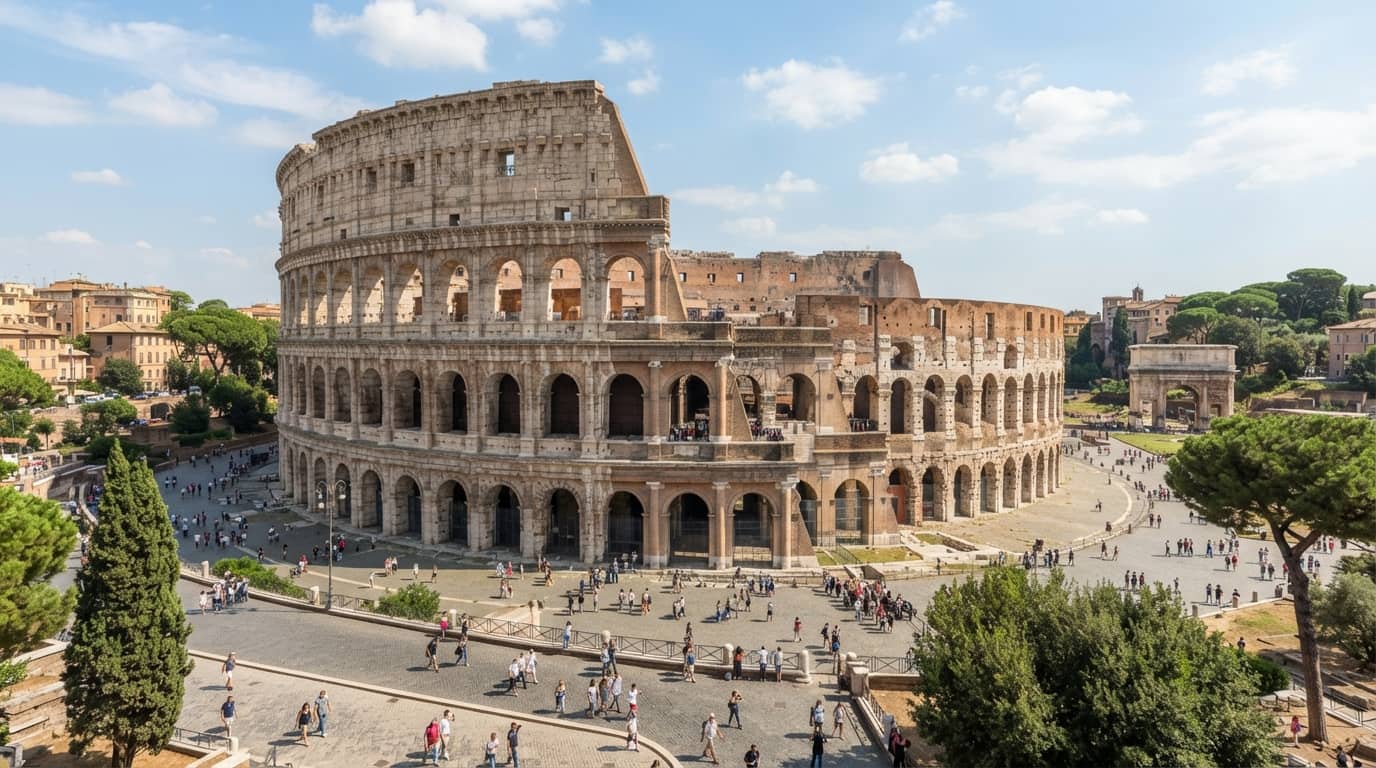
Italy allows a school group to walk through 2,500 years of European history in a single week, from the Roman Forum to Renaissance Florence and the volcanic landscapes of the Bay of Naples. Few destinations pack so much primary evidence — archaeological, artistic and geological — into such short travelling distances.
Students can stand inside the Colosseum, walk the paved streets of Pompeii and Herculaneum where the buildings survive to roof height, and see Michelangelo's David and Botticelli's Primavera as originals rather than textbook plates. Vesuvius, the Campi Flegrei and Sicily's Etna offer active volcanic fieldwork that no classroom model can replicate. Italy also demonstrates urban conservation in practice: Venice's flood barriers and Rome's layered city centre raise real questions about how heritage and modern life coexist.
When to travel
Rome averages around 17°C across the year, with hot, dry summers and mild, damp winters that rarely bring frost. Groups spend long stretches outdoors on stone and marble surfaces, so shade, sun protection and refillable water bottles matter more than raincoats for most of the year.
Spring
March to MayMild and green, gardens in bloom; the strongest window for school groups.
Summer
June to AugustHot and crowded, above 30°C in Rome; early starts essential at open sites.
Autumn
September to NovemberWarm early on, wetter by November; excellent light and thinner crowds.
Winter
December to FebruaryCool and damp, 8-14°C in Rome; quiet museums but short daylight hours.