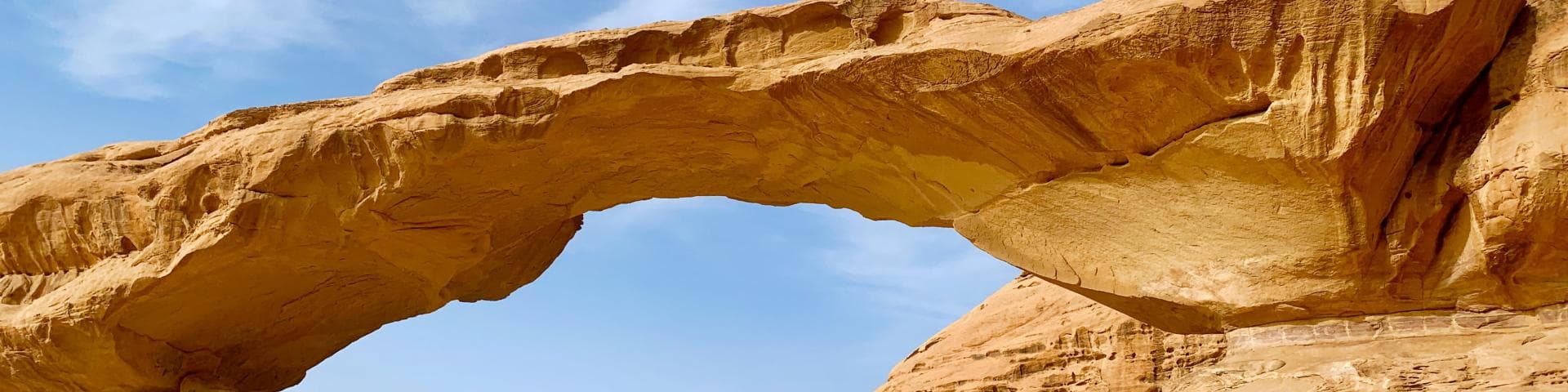



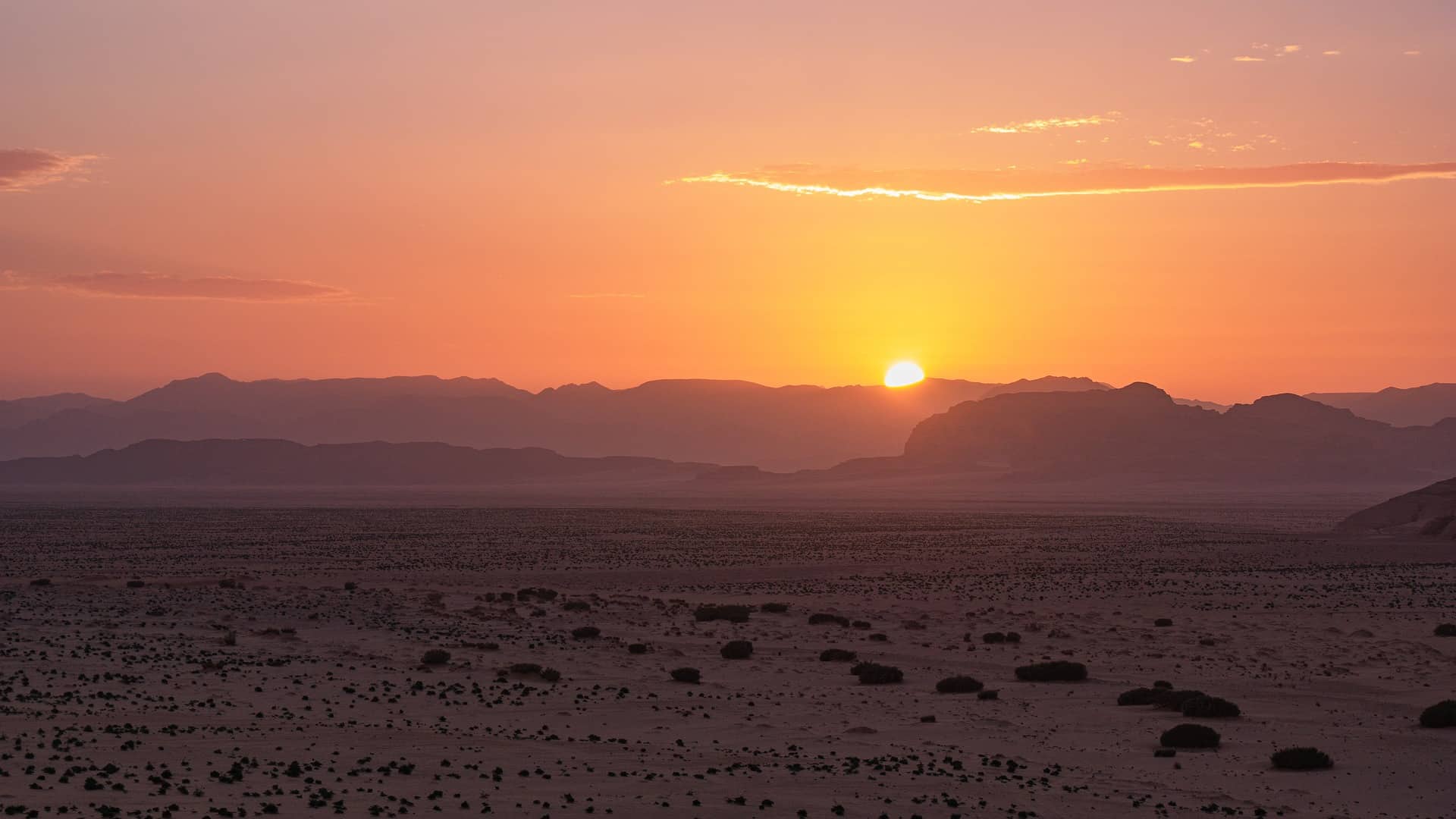
Jordan places students inside layers of history that stretch from Nabataean rock-cut cities to Roman provincial capitals and Crusader castles, all within a few hours' drive of Amman. It is a compact, well-organised destination where a week of travel can cover ancient trade routes, the Dead Sea rift and desert landscapes that shaped human settlement.
Students can walk the colonnaded street of Jerash, one of the best-preserved Roman provincial cities anywhere, and compare it directly with the Nabataean carving at Petra a few hours south. The Jordan Museum in Amman holds the Dead Sea Scroll copper scroll and the 'Ain Ghazal statues, some of the oldest human statuary in existence, which turns abstract prehistory into something students can stand in front of. Floating in the Dead Sea at the lowest point on the earth's land surface also makes rift geology and evaporation impossible to forget.
Curriculum links
History
Petra's Treasury and Siq, the Roman city of Jerash, the Citadel and Temple of Hercules in Amman, Ajloun Castle and the desert fort of Qasr Amra give students Nabataean, Roman, Umayyad and Crusader evidence in a single itinerary.
When to travel
Amman sits on hills at around 900 metres, so summers are hot but dry and evenings cool noticeably, while winters are chilly with occasional rain and rare snow. Petra and Wadi Rum are warmer by day and can be surprisingly cold at night, so layers matter more than students expect.
Spring
March to MayWarm days, wildflowers in the north, ideal for Petra walking and site visits.
Summer
June to AugustHot and dry, over 30°C; early starts needed, Wadi Rum and Petra demanding.
Autumn
September to NovemberSettled, mild and clear — arguably the best window for a school group.
Winter
December to FebruaryCool, sometimes wet in Amman; warm coats needed, but sites are quiet.